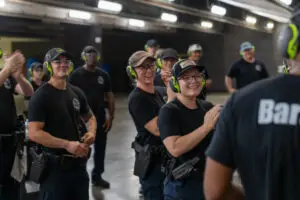
A police academy curriculum prepares recruits for law enforcement. A recruit must meet several basic requirements; this includes a high school diploma or GED, and no felony convictions. At the Fort Wayne Police Department, recruits enter a 34-week academy after completing a multi-step hiring process that includes written exams, physical testing, and background investigations. Here are some elements of a police academy curriculum:
Step-By-Step Process and Requirements
A police academy curriculum offers classroom-based instruction, and it involves a written or electronic test. Before accepting recruits, the academy requires all candidates to pass:
- physical assessment test
- polygraph examination
- medical examination
- psychological review
- background check
Instructors deliver structured lectures and reinforce key material for new recruiters. Instruction is supported by tools such as laptops, and these provide recruits with coursework and training activities. This academic component uses the baseline knowledge required for all other areas of training. It also makes sure that recruits can process information efficiently and apply it in structured environments.
Physical Fitness and Defensive Tactics
Candidates must meet fitness standards before entering the academy, and this involves training that is offered throughout the program. Some academies require recruits to complete a Physical Resiliency Assessment that measures strength and endurance. An academy may require four separate, timed events, such as meter rows, sit-ups, push-ups, and mile runs.
Lateral trainings require physical tests to measure the abilities necessary to perform certain functions. This includes a Physical Ability Test (PAT) in two-part assessments, such as sprints, pursuit runs, and physical restraints. During this test, recruits wear a weighted vest similar to the weight police officers in Fort Worth are expected to carry in gear. Some tests include a weapon-ready position, and others require a stair climb or restraining an individual.
Recruits practice both stand-up and ground techniques. Equipment like training batons, sim suits, and protective gear can be used to simulate realistic encounters while maintaining safety. These elements make sure that recruits develop the strength, coordination, and technical skills required for physical aspects of the job.
Firearms and Use-Of-Force Training
Recruits are expected to demonstrate their overall performance. They need to showcase proper handling, safety procedures, and department-approved methods for firearms. This training builds on the structured requirements outlined during the application process, and it prepares candidates for the responsibilities they will assume after graduation.
Recruits are also introduced to use-of-force concepts that guide how and when force may be applied. These concepts help reinforce exercises that focus on applying procedures in controlled environments. This portion of the curriculum connects technical instruction with practical application. It makes sure that recruits understand both the tools and the standards that govern their use, and it prepares them for continued instruction during the field training phase after the academy.
Scenario-Based Training and Hiring
The hiring process reflects an emphasis on practical readiness. Candidates complete a physical assessment that includes tasks such as running, dragging weighted objects, and navigating obstacles within a time limit. These activities mirror job-related tasks and prepare recruits for academy expectations. The progression from controlled simulations to field training makes sure that recruits can perform duties consistently and according to department standards.
Choose a Police Academy Today
A police academy curriculum is built on a structured combination of academic instruction, physical conditioning, and scenario-based exercises. Each component is supported by specialized facilities and performance standards, and the program continues with field training after graduation. These elements form a comprehensive framework that prepares recruits for the operational requirements of law enforcement. At the Fort Worth Police Department, our academy integrates these elements through classroom learning, defensive tactics, and simulated environments. Explore our website today to learn more about our police curriculum today.