Highlights
- Effective verbal and nonverbal communication serves as the primary tool for de-escalating high-stress encounters, building public trust, and ensuring safety for both officers and community members.
- Police academy curricula dedicate significant instruction to active listening, crisis intervention, cultural awareness, and clear report writing alongside tactical and legal training.
- Transitioning from classroom instruction to supervised field training allows recruits to practice real-time communication skills across unpredictable, everyday patrol scenarios.
- The Fort Worth Police Department equips recruits with comprehensive, paid academy training and dedicated mentorship to prepare them for rewarding careers in modern community policing.
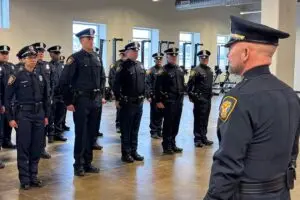
When most people picture police academy training, they imagine defensive tactics, emergency vehicle operations, firearms proficiency, and physical conditioning. While those physical and tactical disciplines are essential for safety in critical moments, the reality of daily patrol work relies far more heavily on another core competency: communication. Every traffic stop, domestic disturbance call, witness interview, and neighborhood interaction begins and ends with how an officer speaks, listens, and reads human behavior. Anyone preparing to pursue a police job quickly discovers that mastering interpersonal communication is just as vital as physical readiness.
At the Fort Worth Police Department, academy instructors place communication at the center of recruit development from day one. From our experience training new classes of officers, the ability to project calm authority, ask clear questions, and listen without premature judgment often determines whether a volatile situation resolves peacefully or escalates unnecessarily. Understanding why communication sits at the heart of police training offers prospective recruits a realistic look at what it takes to succeed in modern law enforcement.
De-Escalating With Verbal and Nonverbal Mastery
In high-stress encounters, individuals experiencing fear, anger, grief, or confusion rarely respond well to barked commands or rigid posture. Police job training teaches recruits how their tone of voice, pacing, eye contact, and physical stance directly influence the emotional temperature of a scene.
Reading Body Language and Projecting Calm Authority
Recruits learn that communication starts before a single word is spoken. Standing at a non-confrontational angle, keeping hands visible and relaxed, and maintaining steady, composed facial expressions signal control without aggression. Academy instructors coach recruits to lower their vocal pitch and slow their cadence when speaking with agitated individuals, creating a psychological anchor that helps bring heightened emotions back down. Our experts have found that recruits who master self-regulation early in training are dramatically more effective at calming chaotic scenes once they hit the streets.
Listening and Crisis Intervention in the Field
Talking clearly is only half of effective law enforcement communication at a police job; listening with genuine focus is equally critical. Officers routinely interact with people experiencing acute mental health crises, substance use emergencies, or sudden personal trauma. In these moments, standard investigative questioning can overwhelm someone who is struggling to process basic information.
Building Rapport During High-Stress Calls
During crisis intervention and behavioral health modules, recruits practice active listening techniques such as paraphrasing, validating emotions without endorsing unlawful behavior, and allowing brief pauses so individuals can gather their thoughts. By demonstrating patience and respect, officers establish rapport that encourages cooperation and reduces the likelihood of physical confrontation. These interpersonal strategies also strengthen relationships during routine community policing, showing residents that their local officers treat every neighbor with dignity.
Bridging Classroom Theory and Real-World Field Training
Learning communication principles in a lecture hall is one thing; applying them on a busy patrol shift at two in the morning is another entirely. That is why structured law enforcement education pairs classroom instruction with extensive, real-world field training under the guidance of veteran officers.
According to Bureau of Justice Statistics data on law enforcement training academies, basic police academy instruction averages roughly 833 hours nationwide, followed by an average of 508 hours of supervised field training. Throughout both phases, communication skills are continuously tested and refined. Inside the Fort Worth Police Department academy, recruits participate in realistic, scenario-based roleplay exercises where professional actors and instructors simulate unpredictable domestic disputes, traffic stops, and public disturbances. Afterward, recruits transition into field training alongside experienced Field Training Officers who evaluate how clearly they communicate with dispatchers, fellow officers, crime victims, and suspects in live environments.
Mastering Written Documentation and Courtroom Credibility
Communication in policing extends far beyond spoken conversations on the street. Every arrest, collision investigation, use-of-force review, and witness statement requires precise, objective written documentation.
Writing Clear, Objective Incident Reports
Academy curricula dedicate substantial instruction to investigative report writing. Recruits are trained to organize facts chronologically, separate direct observations from witness statements, avoid subjective jargon, and record exact quotes accurately. A well-written report ensures that detectives can follow up on leads efficiently, prosecutors can evaluate cases fairly, and the officer can testify with confidence and credibility months or even years later in court.
Teamwork, Radio Discipline, and Interagency Coordination
During an unfolding emergency at a police job, clear internal communication keeps officers and bystanders safe. Recruits must learn to transmit concise, accurate updates over police radio channels while simultaneously managing dynamic, rapidly evolving situations on the ground. To build this radio clarity under pressure, academy training emphasizes standardized terminology, calm vocal delivery, and brief, structured transmissions covering exact locations, suspect descriptions, potential hazards, and immediate resource needs so dispatchers and responding backup units have total situational awareness before arriving on scene.
Beyond internal radio discipline, officers regularly work alongside paramedics, firefighters, social workers, and neighboring law enforcement jurisdictions during complex incidents. Learning how to execute clear, direct verbal handoffs at a busy scene ensures seamless multi-agency management and rapid, uninterrupted care for injured or vulnerable individuals. Equally important is peer accountability within the department itself. Strong internal communication fosters deep mutual trust within patrol squads, enabling beat partners to coordinate tactical movements smoothly, voice safety observations openly, and support one another through demanding, high-stakes shifts.
Starting Your Law Enforcement Journey With the Fort Worth Police Department
Strong communication skills are not reserved for natural extroverts-they are practical, learnable disciplines refined through dedicated coaching, realistic practice, and real-world mentorship. At the Fort Worth Police Department, recruits receive comprehensive, city-paid academy instruction designed to build confident communicators, ethical decision-makers, and trusted community leaders. If you are ready to put your interpersonal strengths to work in a meaningful career, visit our official recruiting portal today to connect with a recruiter, review upcoming Civil Service exam dates, and take the first step toward serving Fort Worth.
Frequently Asked Questions
Our training academy integrates classroom instruction in crisis intervention, active listening, and cultural awareness with realistic, scenario-based roleplay exercises, followed by hands-on mentorship alongside veteran Field Training Officers on patrol.
No prior law enforcement or formal public speaking experience is required. Our paid training academy is designed to develop candidates from all professional backgrounds, teaching verbal de-escalation, radio procedures, and investigative report writing from the ground up.
Success in a police job with the Fort Worth Police Department relies heavily on clear communication to de-escalate tense situations peacefully, write accurate investigative reports, coordinate safely with fellow first responders, and build lasting trust across Fort Worth’s diverse neighborhoods.